
Business Interruption Insurance: How to Protect Your Revenue When You Can't Operate
Business interruption insurance replaces lost income when your business can't operate due to covered events—here's what it covers and why every business needs it.
BUSINESS INSURANCE
Felix | Pinoy General Insurance Services
2/20/20267 min read


Your restaurant catches fire. Insurance pays to repair the building and replace equipment. But what about the three months of lost revenue while you're closed for repairs?
That's where most business owners discover a devastating gap in their coverage: they have property insurance, but no business interruption insurance.
Business interruption (also called business income) insurance replaces lost revenue when your business can't operate due to a covered event. It's one of the most important—and most overlooked—coverages for small businesses.
At Pinoy General Insurance, we've seen businesses with excellent property coverage go bankrupt because they didn't have business interruption coverage. A fire or natural disaster didn't destroy them—the months of lost income did.
This guide explains exactly what business interruption insurance covers, how it works, what it costs, and why every Cerritos and Orange County business should have it.
What Is Business Interruption Insurance?
Business interruption insurance covers lost income and ongoing expenses when your business is forced to close temporarily due to a covered peril.
Covered perils typically include:
Fire
Windstorm
Hail
Vandalism
Theft (if the damage forces closure)
Water damage from burst pipes
Electrical or mechanical breakdown (with endorsement)
Not typically covered:
Pandemic or disease (special coverage required—see COVID-19 lessons below)
Floods (requires separate flood insurance + business interruption rider)
Earthquakes (requires separate earthquake coverage)
Power outages from external causes (unless you buy utility interruption coverage)
Government-ordered closures (unless specific endorsement)
What Business Interruption Insurance Covers
1. Lost Revenue (Net Income)
This is the primary purpose: replacing income you would have earned if the business hadn't been interrupted.
Calculation: Based on your historical financial records and projected revenue.
Example:
Your restaurant averages $50,000/month in revenue
Fire forces closure for 4 months
Business interruption insurance pays approximately $200,000 in lost revenue (after accounting for expenses you didn't incur)
2. Continuing Operating Expenses
Even when your business is closed, certain expenses continue:
Rent or mortgage payments
Employee salaries (if you keep paying them)
Utilities (electricity, water, internet)
Insurance premiums
Loan payments
Property taxes
Equipment leases
Business interruption insurance covers these ongoing costs during the closure.
3. Temporary Relocation Expenses
If you can operate from a temporary location while your primary location is repaired, the policy covers:
Temporary rent
Moving costs
Additional expenses to operate from the temporary location
Example: Your retail store floods. You rent a temporary space in a shopping center while repairs are made. Business interruption covers the temporary rent and moving costs.
4. Extra Expenses to Minimize Loss
Costs incurred to reduce the business interruption period:
Expedited equipment delivery
Overtime pay for faster repairs
Rental equipment
Temporary staffing
Example: You pay $10,000 extra for expedited delivery of replacement equipment, reducing your closure from 3 months to 1 month. The policy covers the $10,000 because it saved $100,000 in lost revenue.
5. Civil Authority Coverage
If government authorities force businesses in your area to close due to a covered peril (e.g., fire in adjacent building, gas leak, etc.), civil authority coverage pays for your lost income.
Important limitation: Most policies only cover 2-4 weeks of civil authority closures.
What Business Interruption Insurance Does NOT Cover
❌ Pandemic or communicable disease closures (unless you have specific pandemic coverage—rare and expensive)
❌ Voluntary closures (if you choose to close for renovations, that's not covered)
❌ Seasonal business fluctuations (normal revenue variations aren't covered)
❌ Loss of customers to competitors (if customers switch to competitors during your closure, lost future revenue isn't covered—only the interruption period)
❌ Physical damage to inventory (that's covered under property insurance, not business interruption)
How Business Interruption Insurance Works: A Real Example
Business: Cerritos restaurant, annual revenue $600,000 ($50,000/month average)
Incident: Kitchen fire caused by electrical malfunction
Damage: Kitchen destroyed, dining room smoke damage
Repair timeline: 4 months
Insurance coverage:
Commercial property insurance: $250,000 (covers repair costs)
Business interruption insurance: $300,000 limit, 12-month coverage period
What the business owner receives:
Property insurance payout: $180,000
Kitchen equipment replacement: $120,000
Dining room repairs: $60,000
Business interruption payout: $163,000
Lost net income: $120,000 (4 months × $30,000 net income/month)
Continuing expenses: $43,000 (rent, utilities, loan payments, insurance for 4 months)
Total insurance payout: $343,000
Out-of-pocket cost: $5,000 deductible
Without business interruption insurance:
Receives $180,000 for property repairs
Still owes rent, utilities, loans: $43,000
Lost income: $120,000
Total loss: $163,000 that insurance doesn't cover
Likely outcome: Business goes bankrupt, can't reopen
With business interruption insurance:
Repairs completed
Bills paid during closure
Employees retained
Business reopens successfully
How Much Business Interruption Coverage Do You Need?
Step 1: Calculate Your Monthly Net Income
Net income = Revenue - Variable expenses (costs that stop when you close)
Example:
Monthly revenue: $50,000
Variable expenses (inventory, hourly wages, supplies that stop when closed): $20,000
Monthly net income to cover: $30,000
Step 2: Calculate Continuing Fixed Expenses
Fixed expenses that continue during closure:
Rent: $5,000/month
Utilities: $800/month
Insurance: $1,200/month
Loan payments: $2,000/month
Salaried employees you keep paying: $4,000/month
Total fixed expenses: $13,000/month
Step 3: Determine Coverage Period
How long would it take to repair or rebuild your business location?
Typical estimates:
Minor damage (smoke, water, vandalism): 1-3 months
Major damage (fire, significant structural): 4-8 months
Total loss (complete rebuild): 9-18 months
Recommendation: Buy coverage for 12 months minimum. Most policies offer 6, 12, 18, or 24-month coverage periods.
Step 4: Calculate Total Coverage Needed
(Monthly net income + Monthly fixed expenses) × Coverage period
Example:
Monthly net income: $30,000
Monthly fixed expenses: $13,000
Coverage period: 12 months
Total business interruption coverage needed: $516,000
Step 5: Add Extra Expense Coverage
Consider adding 10-20% for extra expenses (expedited repairs, temporary location, etc.).
Final coverage recommendation: $550,000-$600,000
What Does Business Interruption Insurance Cost?
Cost varies significantly based on:
Industry (restaurants pay more than offices)
Revenue and coverage amount
Deductible (waiting period)
Building age and construction
Location and fire protection
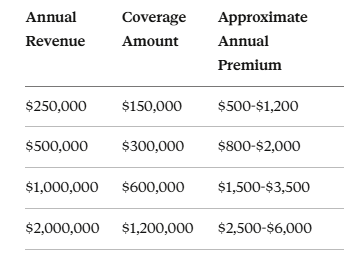
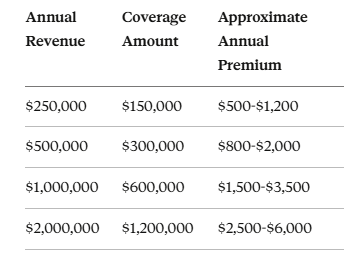
Average costs for California small businesses:
Cost as percentage of revenue: Typically 0.2-0.5% of annual revenue
Factors that reduce cost:
Higher waiting period (deductible)
Shorter coverage period
Sprinkler systems and fire suppression
Security systems
Updated electrical and plumbing
The Waiting Period (Deductible): How It Works
Unlike traditional deductibles (a dollar amount), business interruption policies have a waiting period—typically 48-72 hours.
How it works:
Coverage begins after the waiting period ends.
Example:
Fire occurs on Monday
Waiting period: 72 hours (3 days)
Coverage begins Thursday
If you reopen Friday (only 4 days closed), insurance pays 1 day of lost income
If you reopen in 2 months, insurance pays for approximately 59 days of lost income (60 days - 1 day waiting period)
Common waiting periods:
24 hours
48 hours (most common)
72 hours
7 days
Longer waiting periods = lower premiums
Strategy: If you can afford to cover 1-2 weeks of lost income from reserves, choose a 7-day waiting period to reduce premiums significantly (often 20-30% savings).
Industry-Specific Considerations
Restaurants and Food Service
High risk, high need:
Equipment-intensive (expensive to replace)
Perishable inventory
Health department inspections can delay reopening
Customer base may shift to competitors during closure
Recommendation: 12-18 months of coverage, include spoilage insurance and equipment breakdown
Retail Stores
Moderate risk:
Inventory can be stored temporarily
Seasonal businesses need coverage through peak seasons
E-commerce may allow some revenue continuity
Recommendation: 9-12 months of coverage, consider contingent business interruption (if suppliers are affected)
Professional Services (Law, Accounting, Consulting)
Lower risk:
Can often work from temporary locations
Less equipment-dependent
Client relationships may remain intact
Recommendation: 6-9 months of coverage, focus on civil authority and utility interruption coverage
Manufacturing
High risk, high need:
Equipment-intensive
Supply chain dependencies
Customer contracts may be lost
Specialized equipment has long lead times
Recommendation: 12-24 months of coverage, include contingent business interruption and extra expense coverage
Special Endorsements to Consider
1. Extra Expense Coverage
Pays for extraordinary costs to minimize business interruption—even if you don't fully close.
Example: Your HVAC system fails in July. You rent portable AC units for $3,000/month while waiting for repairs. Extra expense coverage pays for the rental units.
2. Contingent Business Interruption
Covers lost income if your supplier or key customer suffers a covered loss that interrupts your business.
Example: Your restaurant's primary food supplier has a warehouse fire and can't deliver for 6 weeks. You lose business because you can't get inventory. Contingent BI covers your lost income.
3. Civil Authority Coverage Extension
Standard policies cover 2-4 weeks of civil authority closures. This extends it to 8-12 weeks.
4. Utility Interruption Coverage
Covers lost income from power, water, gas, or telecommunications outages caused by damage to off-premises utility infrastructure.
Example: Power lines are damaged 2 miles from your business, causing a 5-day outage. Utility interruption covers your lost income.
5. Ordinance or Law Coverage
If new building codes require expensive upgrades when you rebuild, this covers the additional cost and extended business interruption period.
Lessons from COVID-19: The Pandemic Coverage Gap
The COVID-19 pandemic exposed a massive gap: most business interruption policies exclude pandemics and communicable diseases.
Thousands of businesses filed claims, believing they were covered. Most were denied because:
No physical damage to property occurred (business interruption requires physical loss)
Pandemics were explicitly excluded
Government closures weren't covered under civil authority provisions
What Changed After COVID-19:
New coverage options (limited and expensive):
Pandemic business interruption endorsements (rare, very expensive, limited coverage)
Parametric pandemic policies (pay a fixed amount if certain triggers occur)
What didn't change:
Standard business interruption policies still exclude pandemics
Most small businesses still can't afford pandemic coverage
Alternative strategies:
Build larger cash reserves (6-12 months operating expenses)
Develop business continuity plans that allow remote operation
Diversify revenue streams (e.g., restaurants adding delivery/takeout)
How to Buy Business Interruption Insurance
Step 1: Gather Financial Documents
You'll need:
Profit and loss statements (past 2-3 years)
Tax returns
List of fixed expenses
Revenue projections
Step 2: Calculate Your Coverage Need
Use the formula above to determine how much coverage you need and for what period.
Step 3: Get Quotes from Multiple Carriers
Business interruption is typically bundled with commercial property insurance (called a "Business Owners Policy" or BOP).
Shop at least 3 carriers:
Hartford
Travelers
Nationwide
Liberty Mutual
Chubb
Regional carriers
Or work with an independent agent who can quote multiple carriers simultaneously.
Step 4: Review Policy Terms Carefully
Not all business interruption policies are identical. Compare:
Covered perils
Waiting period
Coverage period (6, 12, 18, or 24 months)
Extra expense limits
Civil authority coverage
Exclusions
Step 5: Update Coverage Annually
Revenue, expenses, and business conditions change. Review and update your coverage every year to ensure it still meets your needs.
Red Flags: Signs Your Business Interruption Coverage Is Inadequate
❌ You haven't updated coverage in 3+ years
If your business has grown but your coverage hasn't, you're underinsured.
❌ Your coverage period is less than 9 months
Most business interruptions last 4-8 months. Six months of coverage may run out before you reopen.
❌ You don't have contingent business interruption
If you rely on a single supplier or key customer, their loss can interrupt your business.
❌ You have no extra expense coverage
Without this, you can't pay for expedited repairs or temporary operations.
❌ Your policy is based on outdated financial projections
If your policy calculates coverage based on 3-year-old revenue data, it's probably too low.
Final Thoughts
Business interruption insurance is the difference between a temporary setback and permanent closure.
Property insurance rebuilds your location. Business interruption insurance keeps your business alive while that happens.
For less than 0.5% of your annual revenue, you can protect your income, retain your employees, and ensure you can reopen after disaster strikes.
Get a free business interruption insurance review:
📞 Call: (562) 402-1737
📧 Email: info@pinoygeneralinsurance.com
📍 Visit: 17304 Norwalk Blvd, Cerritos, CA 90703
🌐 Online: pinoygeneralinsurance.com
We'll review your current commercial insurance, calculate your actual business interruption need, and provide quotes from multiple carriers to ensure you're protected properly.
Because your business deserves more than just property coverage—it deserves income protection too.
About the Author:
Felix Lopez is a licensed insurance agent and business development manager at Pinoy General Insurance Services in Cerritos, California. Since 1993, Pinoy General Insurance has been helping Orange County businesses protect their property, liability, and income through comprehensive commercial insurance solutions.
Contact Us Today
Contact us here at Pinoy General Insurance Services today for all your insurance needs.
Phone
© 2025 Pinoy General Insurance Services. All rights reserved.