
Pet Insurance: Is It Worth It for Cerritos Pet Owners? (Here's the Math)
Pet insurance can save thousands on veterinary bills—here's what it covers, what it costs, and how to decide if it's worth buying.
SPECIALTY INSURANCEINSURANCE TIPS
Felix | Pinoy General Insurance Services
2/27/20266 min read


Your dog needs emergency surgery. The vet bill: $4,500.
Do you have that money available right now? If not, what do you do?
This is the situation thousands of pet owners face every year. Veterinary costs have increased 60% over the past decade, and emergency procedures routinely exceed $3,000-$10,000.
Pet insurance can protect you from these unexpected costs—but it's not right for everyone. The decision depends on your financial situation, your pet's age and breed, and your risk tolerance.
This guide breaks down exactly what pet insurance covers, what it costs in California, and the math you need to determine whether it's worth buying for your situation.
What Is Pet Insurance?
Pet insurance reimburses you for veterinary expenses when your pet gets sick or injured.
How it works:
You pay the vet bill upfront
You submit a claim to your pet insurance company
They reimburse you based on your coverage level (typically 70-90% after deductible)
It's NOT like health insurance:
You can use any licensed vet (no network restrictions)
Pre-existing conditions are excluded
You pay upfront and get reimbursed (not billed directly)
What Does Pet Insurance Cover?
1. Accident Coverage
Covers injuries from accidents:
Broken bones
Lacerations and wounds
Foreign object ingestion
Poisoning
Car accidents
Bite wounds
Example: Your dog swallows a toy, requires emergency surgery. Cost: $3,200. With 80% reimbursement and $250 deductible, you pay $890, insurance pays $2,310.
2. Illness Coverage
Covers treatment for illnesses:
Cancer
Infections
Digestive issues
Respiratory conditions
Kidney disease
Diabetes
Allergies
Example: Your cat is diagnosed with diabetes, requires ongoing insulin and monitoring. Annual cost: $2,400. With 80% reimbursement, you pay $480/year, insurance pays $1,920/year.
3. Hereditary and Congenital Conditions (If Included)
Many breeds are prone to specific genetic conditions:
Hip dysplasia (German Shepherds, Labradors)
Heart conditions (Cavalier King Charles Spaniels)
Respiratory issues (Bulldogs, Pugs)
Not all policies cover hereditary conditions—verify this before buying.
4. Wellness and Preventive Care (Optional Add-On)
Optional wellness plans cover routine care:
Annual exams
Vaccinations
Dental cleanings
Flea/tick prevention
Spay/neuter
Note: Wellness coverage is usually an add-on that costs $10-$25/month extra.
Is it worth it? Usually no. Routine care is predictable and budgetable. The math rarely works out—you pay $200-$300/year for coverage that reimburses $150-$250 in routine care.
What Pet Insurance Does NOT Cover
❌ Pre-existing conditions
Any illness or injury diagnosed before coverage starts
Conditions during waiting periods (typically 14 days for illness, 2 days for accidents)
❌ Elective procedures
Cosmetic surgeries (tail docking, ear cropping)
Breeding costs
Pregnancy and birth
❌ Grooming
❌ Food and supplements (unless prescribed for a covered condition)
❌ Behavioral training (unless related to a medical condition)
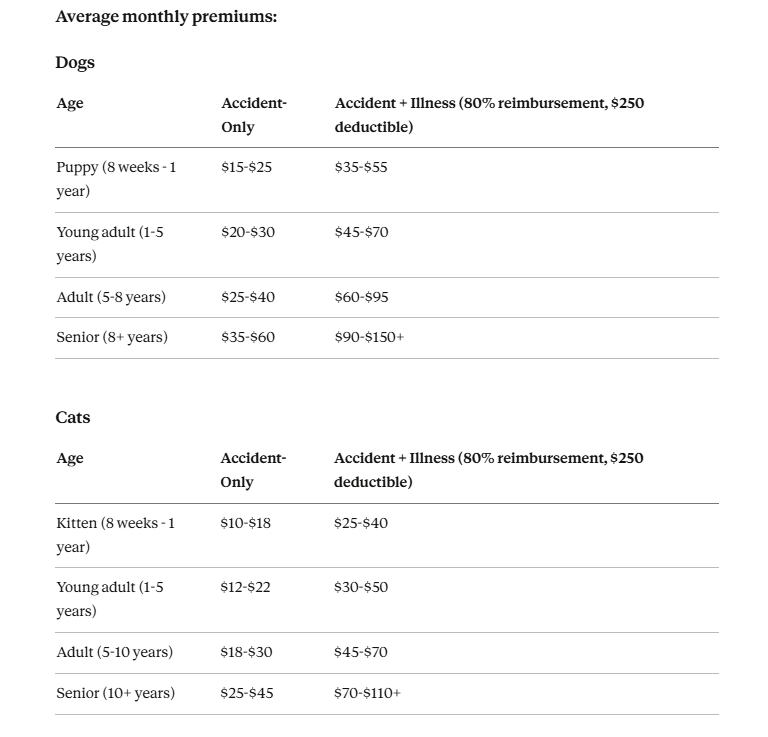
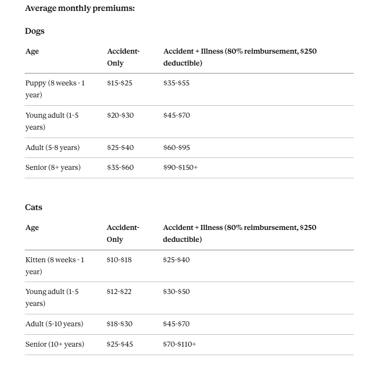
What Does Pet Insurance Cost in California?
Factors that affect cost:
Pet's age (older = more expensive)
Breed (purebreds with known health issues cost more)
Location (California is more expensive than national average)
Coverage level (90% reimbursement costs more than 70%)
Deductible (higher deductible = lower premium)
Annual maximum (unlimited coverage costs more than $10,000 cap)
The Math: Is Pet Insurance Worth It?
This depends on three factors:
Can you afford a $3,000-$8,000 emergency vet bill right now?
Is your pet young and healthy (good candidate) or old with pre-existing conditions (poor candidate)?
Are you disciplined enough to save monthly instead of buying insurance?
Scenario #1: You CAN afford emergency vet bills
Self-insurance strategy:
Don't buy pet insurance
Save $50/month in a dedicated "pet emergency fund"
After 2 years, you have $1,200 saved
After 5 years, you have $3,000 saved
Use this fund for vet emergencies
When this works:
Your pet stays healthy for the first few years
You're disciplined about saving
You have other emergency funds to draw from if needed
When this fails:
Major emergency happens in year 1 before you've saved enough
You're not disciplined about saving
Scenario #2: You CANNOT afford a $5,000 emergency vet bill
Pet insurance makes sense:
Buy accident + illness coverage
Choose 80% reimbursement, $250-$500 deductible
Annual cost: $600-$900 for a young dog, $400-$600 for a cat
If a major emergency occurs, insurance pays 80% of costs
Example:
Emergency surgery: $5,000
Your deductible: $500
Insurance pays 80% of remaining $4,500 = $3,600
You pay: $1,400
Without insurance, you'd pay: $5,000
Scenario #3: High-Risk Breed or Known Health Issues
Breeds prone to expensive conditions:
Bulldogs (respiratory, orthopedic issues)
German Shepherds (hip dysplasia)
Golden Retrievers (cancer)
Dachshunds (back problems)
Great Danes (heart conditions, bloat)
For these breeds, insurance often pays for itself:
Example: Golden Retriever, age 3, diagnosed with cancer. Treatment cost over 2 years: $18,000.
With insurance:
Total premiums paid: $1,200 ($50/month × 24 months)
Deductible per year: $500 × 2 = $1,000
Insurance reimburses: 80% of $17,000 = $13,600
Total out-of-pocket: $1,200 + $1,000 + $3,400 = $5,600
Savings: $12,400
Without insurance:
Total out-of-pocket: $18,000
When to Buy Pet Insurance
✅ Buy Pet Insurance If:
You can't afford unexpected $3,000+ vet bills
Pet insurance converts unpredictable large expenses into predictable monthly premiums
Your pet is young and healthy
No pre-existing conditions to exclude
Lower premiums for young pets
Decades of coverage ahead
You have a purebred with known health risks
Breed-specific conditions are expensive
Insurance covers hereditary conditions (if purchased before diagnosis)
You want peace of mind
You'll never have to choose between your pet's life and your finances
Worth it for emotional security alone
❌ Skip Pet Insurance If:
Your pet is old with pre-existing conditions
Pre-existing conditions won't be covered
Premiums are high for senior pets
Limited benefit period remaining
You have $10,000+ in emergency savings
You can self-insure
Invest the premium savings instead
You're comfortable with risk
You're willing to put a limit on what you'd spend to save your pet
You accept that some conditions may be untreatable due to cost
How to Choose a Pet Insurance Policy
Step 1: Decide on Coverage Type
Accident-only:
Cheapest option
Only covers injuries, not illnesses
Best for: Budget-conscious owners willing to pay for illness out-of-pocket
Accident + Illness:
Covers both accidents and illnesses
Best for: Most pet owners
Accident + Illness + Wellness:
Adds routine care coverage
Usually not worth the extra cost
Step 2: Choose Reimbursement Level
Options: 70%, 80%, or 90%
Higher reimbursement = higher premium
Example:
70% reimbursement: $45/month
80% reimbursement: $55/month
90% reimbursement: $70/month
Recommendation: 80% is the sweet spot—good coverage without excessive premiums.
Step 3: Set Your Deductible
Annual deductible options: $100, $250, $500, $1,000
Higher deductible = lower premium
Example:
$100 deductible: $65/month
$250 deductible: $55/month
$500 deductible: $45/month
Recommendation: Choose the highest deductible you can comfortably afford.
Step 4: Choose Annual Maximum
Options:
$5,000/year
$10,000/year
$20,000/year
Unlimited
Unlimited coverage costs 20-30% more than $10,000 cap
Recommendation: $10,000-$20,000 is adequate for most pets. Unlimited is expensive and rarely needed.
Step 5: Shop Multiple Providers
Top pet insurance companies:
Healthy Paws
Trupanion
Embrace
Nationwide (formerly VPI)
ASPCA Pet Insurance
Pets Best
Figo
Compare:
Premium cost
Reimbursement percentage
Annual maximum
Waiting periods
Hereditary condition coverage
Customer reviews and claim processing speed
Common Pet Insurance Mistakes
Mistake #1: Waiting Until Your Pet Is Old or Sick
Once your pet has a condition, it's pre-existing and won't be covered. Buy insurance while your pet is young and healthy.
Mistake #2: Not Reading the Fine Print on Hereditary Conditions
Some policies exclude breed-specific hereditary conditions. If you have a purebred, verify these are covered.
Mistake #3: Dropping Coverage When Your Pet Is Healthy
If you cancel and your pet later develops a condition, it will be pre-existing when you try to buy coverage again. Keep coverage continuous.
Mistake #4: Not Budgeting for Premium Increases
Pet insurance premiums increase as your pet ages. Budget for 5-10% annual increases.
Mistake #5: Buying Wellness Coverage You Don't Need
Wellness plans rarely provide good value. Save money by budgeting for routine care separately.
Real Stories: When Pet Insurance Saved the Day
Story #1: The Emergency Surgery
Pet: 3-year-old Labrador Retriever, Cerritos
Incident: Swallowed a sock, required emergency surgery to remove intestinal blockage
Cost: $4,800
Insurance: Healthy Paws, 80% reimbursement, $250 deductible
Owner paid: $1,160 ($250 deductible + 20% of remaining $4,550)
Insurance paid: $3,640
Total premiums paid to date: $1,500 (30 months × $50/month)
Net savings: $2,140
Story #2: The Cancer Diagnosis
Pet: 6-year-old Golden Retriever
Diagnosis: Lymphoma, required chemotherapy
Total treatment cost over 18 months: $22,000
Insurance: Trupanion, 90% reimbursement, $500 deductible
Owner paid: $2,700 ($500 deductible + 10% of $22,000)
Insurance paid: $19,800
Total premiums paid: $4,500 (over 6 years at average $62/month)
Net savings: $14,800
Story #3: The Chronic Condition
Pet: 8-year-old cat
Diagnosis: Chronic kidney disease, requires ongoing treatment
Annual treatment cost: $3,200/year for remaining 4 years = $12,800 total
Insurance: Embrace, 80% reimbursement, $250 deductible
Owner pays: $1,000/year deductible + 20% of remaining = $1,590/year × 4 = $6,360
Insurance pays: $6,440
Total premiums paid: $5,400 (over 4 years at $112/month for senior cat)
Roughly break-even, but owner never faced $3,200 bills all at once
The Self-Insurance Alternative
If you decide pet insurance isn't worth it for you, commit to self-insurance:
Step 1: Open a dedicated savings account for pet emergencies
Step 2: Deposit $50-$100/month (the amount you'd pay for insurance)
Step 3: Don't touch this money except for vet emergencies
Step 4: Build to at least $5,000-$10,000
Pros:
You keep the money if your pet stays healthy
No reimbursement hassles
Money earns interest
Cons:
If emergency happens early, you won't have enough saved
Requires discipline to save consistently
No protection against catastrophic costs exceeding your savings
Final Thoughts
Pet insurance isn't for everyone, but it can be a financial lifesaver when your pet faces a major illness or injury.
The key questions:
Can you afford a $5,000-$10,000 vet bill tomorrow?
Would you spend that amount to save your pet?
Is your pet young and healthy (good time to buy)?
If you answered yes to #2 and no to #1, pet insurance is probably worth it.
Have questions about pet insurance or other specialty coverages?
📞 Call: (562) 402-1737
📧 Email: info@pinoygeneralinsurance.com
📍 Visit: 17304 Norwalk Blvd, Cerritos, CA 90703
🌐 Online: pinoygeneralinsurance.com
While we specialize in auto, home, and business insurance, we're happy to discuss pet insurance options and point you toward reputable providers.
About the Author:
Felix Lopez is a licensed insurance agent and business development manager at Pinoy General Insurance Services in Cerritos, California. Since 1993, Pinoy General Insurance has been helping Southern California residents protect what matters most—including their furry family members.
Contact Us Today
Contact us here at Pinoy General Insurance Services today for all your insurance needs.
Phone
© 2025 Pinoy General Insurance Services. All rights reserved.