
Tax-Advantaged Insurance Strategies for High Earners in California
How California high earners can leverage insurance for tax advantages including health insurance deductions, HSA strategies, tax-free wealth transfer, and estate planning.
INSURANCE TIPS
Felix | Pinoy General Insurance Services
3/30/202612 min read


You're earning $250,000+ annually. Between federal taxes, California state taxes, and FICA, you're losing 40-50% of every dollar to taxes.
But while you're diligent about maxing out your 401(k) and tracking deductions, you're likely missing significant tax advantages hidden in insurance strategies.
Here's what most high earners don't realize:
Self-employed health insurance can save you $15,000-$30,000/year
HSA strategies can create $500,000+ in tax-free retirement wealth
Life insurance can transfer millions tax-free to heirs
Long-term care premiums offer substantial deductions
Premium financing can leverage estate planning
After helping affluent Orange County residents optimize their insurance and tax strategies since 1993, I can show you exactly how to use insurance not just for protection—but as powerful tax-advantaged wealth-building tools.
This guide breaks down five tax-advantaged insurance strategies specifically for California high earners, with real examples, tax savings calculations, and implementation steps.
Strategy #1: Self-Employed Health Insurance Deduction
If you're self-employed, health insurance premiums are one of the most overlooked and most valuable tax deductions available.
Who Qualifies:
✅ Self-employed individuals (sole proprietors, partners, LLC members, S-corp shareholders with 2%+ ownership) ✅ Have net self-employment income ✅ Not eligible for employer-sponsored health insurance (through your employer or spouse's employer) ✅ Pay health insurance premiums for yourself, spouse, and dependents
What's Deductible:
Premiums for:
Medical insurance
Dental insurance
Vision insurance
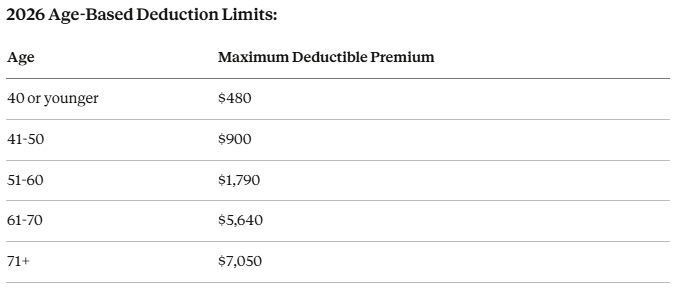
Qualified long-term care insurance (with age-based limits)
Medicare premiums (Part B, Part D, Medicare Advantage, Medigap)
Where to Deduct:
Line 17 of Schedule 1 (Form 1040) - "above the line" deduction
Why this matters:
Reduces your Adjusted Gross Income (AGI)
Not subject to 7.5% AGI threshold like medical expense deductions
Reduces both federal AND California state income taxes
Also reduces self-employment tax calculation base
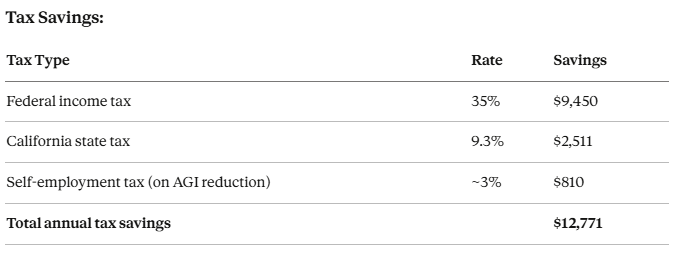
The Math - Real California Example:
Self-employed consultant earning $300,000/year
Health insurance premiums:
Family coverage: $24,000/year
Dental: $2,400/year
Vision: $600/year
Total premiums: $27,000/year
Effective cost of insurance: $27,000 - $12,771 = $14,229
You're getting $27,000 in health insurance for an effective cost of $14,229—a 47% discount via tax savings.
Over 20 years: $255,420 in tax savings (assuming consistent premiums and rates)
Common Mistakes:
❌ Mistake #1: Taking deduction when eligible for spouse's employer coverage
If you CAN get on spouse's plan, you can't take self-employed deduction
Strategy: Evaluate if tax savings outweigh spouse's employer contribution
❌ Mistake #2: Not deducting qualified long-term care premiums
Age-based limits apply, but significant deductions available
Age 61-70: $5,640 deductible per person (2026 limits)
Often overlooked addition to health insurance deduction
❌ Mistake #3: S-Corp owners taking deduction incorrectly
Must include premiums in W-2 wages
Special reporting requirements
Consult tax professional for proper treatment
How to Maximize:
Step 1: Ensure you're truly self-employed and not eligible for employer coverage
Step 2: Document all health insurance premiums paid
Medical, dental, vision
Qualified long-term care
Medicare premiums (if applicable)
Step 3: Calculate deduction limit
Cannot exceed net self-employment income
If income is $50K but premiums are $30K, you can deduct full $30K
If income is $20K but premiums are $30K, deduction limited to $20K
Step 4: Report correctly on tax return
Schedule 1, Line 17
Also adjust self-employment tax calculation on Schedule SE
Step 5: Maintain documentation
Premium payment receipts
Policy documents
Proof of self-employment income
Related Reading: For more on business insurance fundamentals, see our complete guide.
Strategy #2: HSA Maximization for Tax-Free Wealth Building
Health Savings Accounts (HSAs) are the most tax-advantaged accounts available—better than 401(k)s, IRAs, or Roth IRAs for those who qualify.
The Triple Tax Advantage:
Contributions are tax-deductible (federal and California)
Growth is tax-free (no taxes on investment gains)
Withdrawals are tax-free (for qualified medical expenses)
No other account offers all three benefits.
Who Qualifies:
✅ Enrolled in High-Deductible Health Plan (HDHP) ✅ Not enrolled in Medicare ✅ Not claimed as dependent on someone else's taxes ✅ No other non-HDHP coverage (with some exceptions)
2026 Contribution Limits:
Individual coverage: $4,300
Family coverage: $8,550
Age 55+ catch-up: Additional $1,000
The High Earner Strategy: HSA as Stealth Retirement Account
Most people use HSAs wrong—they withdraw for current medical expenses. High earners should use HSAs as long-term wealth-building vehicles.
The Optimal Approach:
Step 1: Max out HSA contributions every year
Step 2: Pay current medical expenses OUT OF POCKET (don't withdraw from HSA)
Step 3: Invest HSA funds aggressively (stocks, index funds)
Step 4: Let HSA grow tax-free for decades
Step 5: After age 65, withdraw tax-free for:
Medicare premiums
Long-term care expenses
Any other qualified medical expenses
OR withdraw for any purpose (taxed as ordinary income, like traditional IRA)
The Math - Real Example:
California high earner, age 45, maxing family HSA for 20 years
Annual contribution: $8,550 Years contributing: 20 years (age 45-65) Total contributions: $171,000 Average annual return: 8% Account value at age 65: $415,869
Tax savings on contributions:
Federal (35% bracket): $59,850
California (9.3%): $15,903
Total tax savings: $75,753
At age 65-95 (30 years of retirement):
Medical expenses paid from HSA: $415,869
All withdrawals: 100% tax-free
If these were paid from taxable accounts: ~$166,000 in taxes (40% tax rate)
Total tax savings over lifetime: $241,753
From $171,000 in contributions, you've created $415,869 in tax-free wealth—a 143% increase solely from tax advantages and tax-free growth.
Advanced HSA Strategy: Triple-Dipping
Step 1: Pay medical expenses out-of-pocket during working years
Step 2: Save all receipts for these expenses (no time limit on reimbursement)
Step 3: Let HSA investments grow for 20-30 years
Step 4: In retirement, reimburse yourself for decades of saved receipts
Withdraw tax-free from HSA
Reimburse for expenses paid 20+ years ago
Use cash for any purpose (already reimbursed from HSA)
This converts HSA into tax-free cash with no restrictions.
Example:
Age 45-65: Pay $100,000 in medical expenses out-of-pocket, save receipts
Age 65: HSA worth $400,000
Withdraw $100,000 tax-free to "reimburse" 20-year-old expenses
Spend $100,000 on vacation, home renovation, grandkids—anything
Still have $300,000 in HSA for future medical needs
HSA Investment Allocation for High Earners:
Ages 40-55: 80-90% stocks (long time horizon) Ages 55-65: 60-70% stocks (still long-term, but approaching retirement) Ages 65+: 40-50% stocks (using funds over 20-30 year retirement)
Mistake to Avoid:
❌ Keeping HSA in cash/money market
You lose decades of tax-free growth
HSA is retirement account, not emergency fund
For more on maximizing insurance deductions, see our guide on homeowners insurance deductibles.
Strategy #3: Life Insurance as Tax-Free Wealth Transfer
For California high earners with estates exceeding federal estate tax exemption ($13.99 million in 2026, potentially dropping to ~$7 million in 2026), life insurance offers powerful tax-free wealth transfer.
Why Life Insurance for Estate Planning:
✅ Death benefit is income tax-free to beneficiaries ✅ Can be estate tax-free if properly structured (Irrevocable Life Insurance Trust) ✅ No probate (passes directly to beneficiaries) ✅ Creditor protection in California ✅ Guaranteed liquidity to pay estate taxes ✅ Cash value growth is tax-deferred (permanent policies)
The Estate Tax Problem:
California couple with $20 million estate
Federal estate tax (2026):
Exemption: $13.99 million (married couple)
Taxable estate: $6.01 million
Estate tax rate: 40%
Federal estate tax due: $2,404,000
Without liquidity, heirs forced to:
Sell family business
Liquidate investments at bad time
Sell real estate quickly (below market value)
Life Insurance Solution:
Purchase $3 million second-to-die life insurance policy:
Owned by Irrevocable Life Insurance Trust (ILIT)
Premium: ~$30,000-$50,000/year (depending on age/health)
Death benefit: $3,000,000 (income tax-free, estate tax-free)
Heirs use proceeds to pay $2.4M estate tax
Keep all assets intact
Cost over 20 years: $600,000-$1,000,000 in premiums Benefit: $3,000,000 tax-free to heirs Net gain: $2,000,000-$2,400,000
Types of Life Insurance for Wealth Transfer:
1. Second-to-Die (Survivorship) Life Insurance
How it works:
Insures two lives (typically spouses)
Pays death benefit after second death
Lower premiums than two individual policies
Best for:
Married couples with estate tax concerns
Estate exceeds federal exemption
Want to maximize death benefit per premium dollar
2. Whole Life Insurance
Features:
Guaranteed death benefit
Guaranteed cash value growth
Fixed premiums (never increase)
Dividends (from mutual companies)
Best for:
Want certainty and guarantees
Conservative investors
Willing to pay higher premiums for safety
3. Indexed Universal Life (IUL)
Features:
Death benefit protection
Cash value linked to stock index (S&P 500)
Downside protection (0% floor, no losses)
Upside potential (typically capped at 10-12%)
Flexible premiums
Best for:
Want growth potential without risk
Comfortable with caps on gains
Want premium flexibility
4. Variable Universal Life (VUL)
Features:
Death benefit protection
Cash value invested in sub-accounts (like mutual funds)
Full market exposure (risk and reward)
Flexible premiums
Best for:
Sophisticated investors
Want maximum growth potential
Comfortable with investment risk
Long time horizon (20+ years)
The Tax-Free Wealth Transfer Math:
High earner, age 50, $15 million estate
Option 1: No Planning
Estate tax at death: $2.4 million
Heirs receive: $12.6 million (net)
Option 2: $3M Life Insurance in ILIT
Annual premium: $40,000
Pay for 20 years: $800,000
Estate tax: $2.4 million
Life insurance proceeds: $3 million
Heirs receive: $15 million + ($3M - $2.4M) = $15.6 million net
Heirs get $3 million MORE than Option 1, despite $800K in premiums.
Advanced Strategy: Premium Financing
For very high net worth individuals, premium financing can magnify leverage:
How it works:
Take loan from bank/specialty lender to pay life insurance premiums
Collateralize with investments (don't liquidate)
Pay loan interest (deductible if structured properly)
At death, insurance pays loan and remainder to heirs
Example:
$10 million life insurance policy
Annual premium: $200,000
Borrow premiums for 10 years: $2 million
Pay loan interest: 5% = $100,000/year
At death: $10M pays off $2M loan, heirs get $8M
Total out-of-pocket: $1 million (interest) Heirs receive: $8 million net Effective cost: 12.5% of death benefit
For more on life insurance basics, see our life insurance guide for young families.
Strategy #4: Long-Term Care Insurance Tax Benefits
Long-term care (LTC) insurance offers significant tax advantages that most high earners overlook.
Federal Tax Benefits:
Premiums are tax-deductible as medical expenses (subject to 7.5% AGI threshold for itemizers)
For couples both age 65: $11,280 deductible ($5,640 × 2)
California Specific:
California allows the same deductions as federal, PLUS:
California Partnership Program:
Purchase qualifying LTC policy
Get "asset protection" equal to benefits received
If you need Medi-Cal later, protected assets don't count
Example:
Purchase LTC policy with $300,000 in benefits
Use $200,000 for care
$200,000 of your assets now protected if applying for Medi-Cal
Can keep additional $200K + normal Medi-Cal exemptions
The Tax Math for High Earners:
California couple, both age 65, $400,000+ AGI
LTC premiums paid:
His premium: $4,200/year
Her premium: $3,800/year
Total: $8,000/year
Tax deduction:
Maximum deductible (age 61-70): $5,640 each
Total deductible amount: $11,280
Exceeds actual premiums, so deduct full $8,000
But wait - 7.5% AGI threshold applies:
AGI: $400,000
7.5% threshold: $30,000
Must exceed $30,000 in medical expenses to deduct
Strategy: Bundle medical expenses
LTC premiums: $8,000
Health insurance (if self-employed): $20,000
Dental work: $5,000
Vision: $1,000
Total medical: $34,000
Deductible amount: $34,000 - $30,000 = $4,000
Tax savings:
Federal (35%): $1,400
California (9.3%): $372
Total: $1,772/year
Over 20 years: $35,440 in tax savings
Better Strategy for Business Owners:
If you own a C-Corporation:
Corporation pays LTC premiums as employee benefit
100% deductible to corporation (no AGI threshold)
Not taxable to you as employee
Benefits received are tax-free
Tax savings for C-Corp paying $8,000 in LTC premiums:
Corporate tax deduction (21%): $1,680
You avoid income tax on $8,000 benefit: $3,544 (44.3% combined CA+Federal)
Total annual tax savings: $5,224
Over 20 years: $104,480 in tax savings
For self-employed: LTC premiums qualify for self-employed health insurance deduction (Strategy #1), avoiding the 7.5% AGI threshold entirely.
Hybrid LTC Policies:
Consider life insurance with LTC rider:
Death benefit if you never need LTC
LTC benefits if you do need care
Premium may be fully deductible under self-employed health insurance deduction
Guarantees money isn't "wasted" if you don't use LTC
For more on protecting your business, see our key person insurance guide.
Strategy #5: Premium Financing for Estate Planning
Premium financing is an advanced strategy for ultra-high-net-worth individuals (estates $20M+).
How It Works:
Traditional approach:
Pay $200,000/year in life insurance premiums from cash flow
After-tax dollars (already paid income tax on this money)
Reduces investable assets
Premium financing approach:
Borrow from bank to pay premiums
Collateralize loan with securities (don't sell investments)
Pay only loan interest annually (5-7% typically)
Investments continue growing in your portfolio
At death, insurance pays loan + remainder to heirs
The Math - Real Example:
Age 60, $30M estate, needs $10M life insurance
Traditional Approach:
Annual premium: $300,000
Pay from cash flow for 10 years
Total out-of-pocket: $3,000,000
This money could have been invested elsewhere
Premium Financing Approach:
Borrow $300,000/year for 10 years: $3,000,000 total
Collateral: $3.5M in securities (don't liquidate)
Interest rate: 6%
Annual interest: ~$180,000 (averaged over 10 years)
Total interest paid: $1,800,000
At death:
Insurance pays: $10,000,000
Loan repayment: $3,000,000
Net to heirs: $7,000,000
Comparison:
Traditional: $3M in premiums, heirs get $10M
Financing: $1.8M in interest, heirs get $7M
But here's the key: The $3M in collateral securities that weren't liquidated:
Continued growing during 10 years at 8%: Now worth $6.5M
Plus generated income: $900,000
Total preservation: $7.4M
Net result:
Heirs get: $7M (insurance) + $6.5M (preserved securities) = $13.5M
Total cost: $1.8M (interest only)
Compare to traditional: $10M (insurance) + $0 (securities were liquidated for premiums)
Premium financing nets heirs $3.5M MORE.
Tax Advantages:
Interest may be tax-deductible if:
Structured as investment interest
Securities generate investment income
Subject to investment interest deduction limits
Strategy optimization:
Use dividend-paying stocks as collateral
Dividends cover part/all of interest payments
Potentially deductible interest reduces effective cost
Risks to Consider:
⚠️ Loan can be called if collateral value drops significantly ⚠️ Interest rates can rise (use rate caps/collars) ⚠️ Policy performance matters (especially with VUL/IUL) ⚠️ Regulatory changes could impact strategy
Best for:
Estates $20M+
Significant investable assets (to collateralize)
Long-term time horizon (10+ years)
Estate tax concerns
Want to preserve liquidity
For comprehensive business insurance planning, see our business insurance 101 guide.
Combining Strategies: The High Earner's Complete Tax-Advantaged Insurance Plan
Most powerful approach: Use ALL five strategies together.
Real California Example:
Self-employed professional, age 50, $500K income, $15M estate
Strategy 1: Self-Employed Health Insurance
Premium: $30,000/year
Tax savings: $13,000/year
Strategy 2: Max HSA
Contribution: $8,550/year
Tax savings: $3,850/year
Future value (20 years): $415,869 (all tax-free)
Strategy 3: Life Insurance in ILIT
$5M second-to-die policy
Premium: $60,000/year
Estate tax savings: $2,000,000 (for heirs)
Strategy 4: LTC Insurance
Premium: $8,000/year (both spouses)
Tax savings: $3,400/year (via self-employed deduction)
Strategy 5: Premium Financing (for portion of life insurance)
Finance $30,000 of $60,000 annual premium
Interest: $1,800/year
Preserves: $600,000 in investments over 20 years
Total Annual Out-of-Pocket:
Health insurance: $30,000 - $13,000 tax savings = $17,000
HSA: $8,550 - $3,850 tax savings = $4,700
Life insurance: $30,000 (self-paid) + $1,800 (financing interest) = $31,800
LTC: $8,000 - $3,400 tax savings = $4,600
Total: $58,100/year
Total Annual Benefits:
Insurance coverage: $5M+ in life insurance, comprehensive health, LTC protection
Current tax savings: $23,650/year
Future tax-free wealth: $415,869 (HSA) + preserved investments
Estate tax savings for heirs: $2,000,000+
Return on Investment:
Spending: $58,100/year
Current tax savings: $23,650/year
Net cost: $34,450/year
Protection + future wealth created: $7,000,000+
This is comprehensive tax-advantaged protection and wealth transfer.
Implementation Checklist
Quarter 1 (Now - March 31):
✅ Review current tax bracket and AGI ✅ Determine which strategies apply to your situation ✅ Gather current insurance policies for review ✅ Calculate potential tax savings from each strategy ✅ Consult with tax advisor on strategy implementation
Quarter 2 (April - June):
✅ If self-employed: Ensure health insurance deduction on tax return ✅ Open HSA (if eligible) and max contribution ✅ Get life insurance quotes for estate planning needs ✅ Evaluate LTC insurance options and tax benefits ✅ If ultra-high-net-worth: Explore premium financing
Quarter 3 (July - September):
✅ Implement chosen life insurance strategy (ILIT setup if needed) ✅ Review HSA investment allocation ✅ Purchase LTC insurance if appropriate ✅ Set up premium financing (if applicable) ✅ Document all strategies for year-end tax planning
Quarter 4 (October - December):
✅ Ensure all deductible premiums paid before 12/31 ✅ Max HSA contribution before year-end ✅ Review total tax savings achieved ✅ Plan next year's contributions and premiums ✅ Coordinate with CPA for tax return preparation
Common Mistakes High Earners Make
Mistake #1: Not Planning Because "Taxes Are Complicated"
Complexity is not an excuse to leave money on the table. These strategies can save $20,000-$50,000+ annually in taxes.
Mistake #2: Waiting Until Retirement to Use HSA
HSA should be your LAST account tapped in retirement, not your first. Use taxable accounts first, then tax-deferred, then HSA last for maximum tax efficiency.
Mistake #3: Buying Wrong Life Insurance Type
Term insurance is cheap but expires. For estate planning, you need permanent insurance that's guaranteed to pay out. Match policy type to goal.
Mistake #4: Not Using ILIT for Life Insurance
Life insurance owned by you is included in your taxable estate. ILIT removes it from estate, saving 40% in estate taxes on death benefit.
Mistake #5: Ignoring Long-Term Care Planning
One spouse's long-term care costs can devastate finances for surviving spouse. LTC insurance with tax benefits is crucial planning tool.
Working with Professionals
These strategies require coordination between:
Insurance Professional (us!):
Analyze coverage needs
Compare policy options
Structure for tax efficiency
Implement strategies
Tax Advisor/CPA:
Calculate tax savings
Ensure proper deductions
Integrate with overall tax strategy
Maximize benefits
Estate Planning Attorney:
Create ILIT (if needed)
Structure estate plan
Coordinate with insurance/tax strategies
Ensure legal compliance
Financial Advisor:
Integrate insurance with overall financial plan
HSA investment allocation
Premium financing evaluation
Wealth transfer coordination
We coordinate with all professionals to ensure seamless implementation.
Related Resources
For more information on insurance strategies, see our comprehensive guides:
Business Insurance 101 - Essential coverage for California small businesses
Key Person Insurance - Protecting your business from loss of critical employees
Life Insurance Guide for Young Families - Foundation life insurance planning
Homeowners Insurance Deductibles - Optimizing your deductibles for tax efficiency
Commercial Auto Insurance - Tax-deductible business vehicle coverage
Condo Insurance vs HOA Master Policy - Understanding coverage for condo owners
Flood Insurance in California - Protecting high-value properties
Get Your Free Tax-Advantaged Insurance Analysis
If you're a California high earner, you're likely missing significant tax savings through insurance strategies. But implementing these strategies requires expertise in both insurance and tax planning.
Contact Pinoy General Insurance Services for:
Free high-earner insurance analysis
Tax savings calculation for your situation
Strategy implementation roadmap
Coordination with your tax advisor and estate attorney
Annual review and optimization
Located at 17304 Norwalk Blvd, Cerritos, CA 90703, we've been helping affluent Orange County residents optimize their insurance and tax strategies since 1993. As a founding member of the Artesia Chamber of Commerce, we specialize in working with successful business owners and high-income professionals.
We specialize in tax-advantaged insurance for:
Self-employed professionals ($200K+ income)
Business owners
High-net-worth families (estates $5M+)
Ultra-high-net-worth (estates $20M+)
Anyone in 32%+ federal tax bracket
Call (562) 402-1737 or email info@pinoygeneralinsurance.com for your free tax-advantaged insurance analysis.
Don't leave $20,000-$50,000+ in annual tax savings on the table. Let us show you how insurance can be your most powerful tax-advantaged wealth-building tool.
About the Author:
Felix Lopez is a licensed insurance agent and business development manager at Pinoy General Insurance Services in Cerritos, California. Since 1993, Pinoy General Insurance has been helping Orange County's affluent residents and business owners leverage insurance for tax advantages, wealth transfer, and estate planning. Felix specializes in working with high-income earners to implement sophisticated insurance strategies that minimize taxes and maximize wealth preservation. He works closely with clients' CPAs, financial advisors, and estate planning attorneys to ensure seamless coordination of all financial strategies.
Pinoy General Insurance Services
17304 Norwalk Blvd
Cerritos, CA 90703
Phone: (562) 402-1737
Email: info@pinoygeneralinsurance.com
Website: pinoygeneralinsurance.com
Founding Member - Artesia Chamber of Commerce
Contact Us Today
Contact us here at Pinoy General Insurance Services today for all your insurance needs.
Phone
© 2025 Pinoy General Insurance Services. All rights reserved.